Green Resilience
Platform

Anticipate climate risks. Protect your operations, your strategy, and your finances. Adapt & thrive.

Green Resilience helps organisations translate weather, satellite, climate, and operational context into risk levels, operational windows, alerts, recommendations, reports, and integration-ready outputs.

greenresilience.io / dashboard
Green Resilience SaaS dashboard showing forecast monitoring and operational decision-support modules.
Platform capabilities

Decision-support modules

Green Resilience can be configured around the operational, strategic, and financial decisions that matter most to each organisation, sector, site, asset, or activity.

Operational risk scoring

Transform weather, satellite, and climate indicators into clear risk levels for sites, assets, crops, routes, territories, or operational activities.

Practical examples
  • Rainfall risk for site access
  • Heat stress risk for workers, crops, or equipment
  • Wind risk for lifting, spraying, drone, or exposed operations
  • Flood, drought, storm, or visibility risk
  • Composite risk scores by site or activity
Outputs
  • Low / moderate / high / critical risk levels
  • Time-to-impact warnings
  • Short rationale explaining key drivers
  • Recommended action or escalation
Operational windows

Identify when conditions are suitable, cautionary, or unsuitable for weather-sensitive activities.

Practical examples
  • Spray windows
  • Site access windows
  • Maintenance windows
  • Safe work windows
  • Irrigation windows
  • Transport or logistics windows
Outputs
  • Best execution windows
  • Avoid windows
  • 24h / 72h outlooks
  • Go / caution / no-go guidance
  • Role-specific recommendations

Alerts and escalation

Turn threshold exceedances and emerging risks into timely alerts for the right people.

Practical examples
  • HSE alerts for heat, storms, lightning, or high wind
  • Heavy rainfall and access disruption alerts
  • Farmer or agribusiness weather alerts
  • Maintenance or operational planning alerts
  • Management digests and programme alerts
Outputs
  • Email, WhatsApp, SMS, dashboard, or API alerts
  • Severity bands
  • Escalation paths
  • Alert logs
  • Recommended next steps

Advisory and recommendations

Translate risk signals into practical guidance that users can act on, while keeping uncertainty visible where the data does not support a definitive answer.

Practical examples
  • Farmer weekly advisory
  • Agribusiness field team guidance
  • Mining site access recommendation
  • Maintenance rescheduling suggestion
  • Heat stress precaution recommendation
  • Infrastructure planning note
Outputs
  • Actionable advisory messages
  • Short rationale
  • Confidence-aware wording
  • Human escalation where needed
  • Reports or partner-ready outputs

Strategic resilience planning

Use seasonal outlooks and climate projections to support long-term planning, adaptation, asset resilience, and investment decisions.

Practical examples
  • Asset resilience screening
  • Planning assumption updates
  • Climate stress-testing
  • Portfolio prioritisation
  • Supply-chain exposure screening
  • Crop suitability shifts
Outputs
  • Strategic risk summaries
  • Scenario-based insights
  • Planning assumptions
  • Adaptation priorities
  • Executive reports

Satellite and spatial monitoring

Use satellite and spatial indicators to add context to risk interpretation across farms, sites, territories, or asset portfolios.

Practical examples
  • Vegetation condition
  • Soil moisture signals
  • Surface water or flood exposure
  • Field or site anomaly detection
  • Spatial stress patterns
  • Regional exposure mapping
Outputs
  • Map views
  • Spatial risk layers
  • Anomaly flags
  • Site or parcel context
  • Visual evidence for reports
Operational decision logic

Three practical questions for weather-sensitive operations

For each activity, Green Resilience can help teams assess whether action is needed, whether conditions are suitable, and whether the operation can proceed safely. The answer should not be a simple yes or no. It should be linked to severity, timing, confidence, and recommended next steps.

Should we act?

Is there a climate, weather, agronomic, safety, access, production, or financial risk that requires action now or soon?

Examples
  • Disease-conducive weather
  • Heavy rainfall risk
  • Heat stress risk
  • Flood or access risk
  • Maintenance timing risk
  • Supply-chain exposure
Decision logic
Low:Monitor
Moderate:Prepare or adjust
High:Act, delay, or escalate
Critical:Intervene or stop exposed activity

Can we act effectively?

Are conditions suitable for the intended activity, or would weather reduce effectiveness, quality, efficiency, or reliability?

Examples
  • Spray effectiveness
  • Irrigation timing
  • Maintenance windows
  • Construction windows
  • Logistics and access
  • Energy operations
Decision logic
Low:Proceed
Moderate:Proceed with caution
High:Delay or adapt the plan
Critical:Do not proceed

Can we operate safely?

Are there safety constraints that affect people, equipment, assets, sites, or field teams?

Examples
  • High wind
  • Lightning or storms
  • Extreme heat
  • Flooded access
  • Visibility constraints
  • Unsafe field or site conditions
Decision logic
Low:Proceed
Moderate:Monitor and brief teams
High:Escalate and restrict activity
Critical:Stop or activate emergency protocols

Severity levels guide the decision

Low

Conditions are acceptable. Proceed or monitor.

Moderate

Some risk factors are present. Proceed with caution, prepare, or monitor closely.

High

Material risk is likely. Delay, adapt, escalate, or apply controls.

Critical

Severe or imminent risk. Stop exposed activity, protect people/assets, and escalate immediately.

24h operational windowIllustrative
00h06h12h18h24h
LowProceedModerateProceed with cautionHighDelay / adaptCriticalDo not proceed / escalate

Operational windows combine timing, severity, and context. The goal is to help teams decide when to proceed, when to adapt, and when to stop or escalate.

Maintenance windowSite accessField operationDrone or spray operationHeat-sensitive workLogistics movement
Operational planning

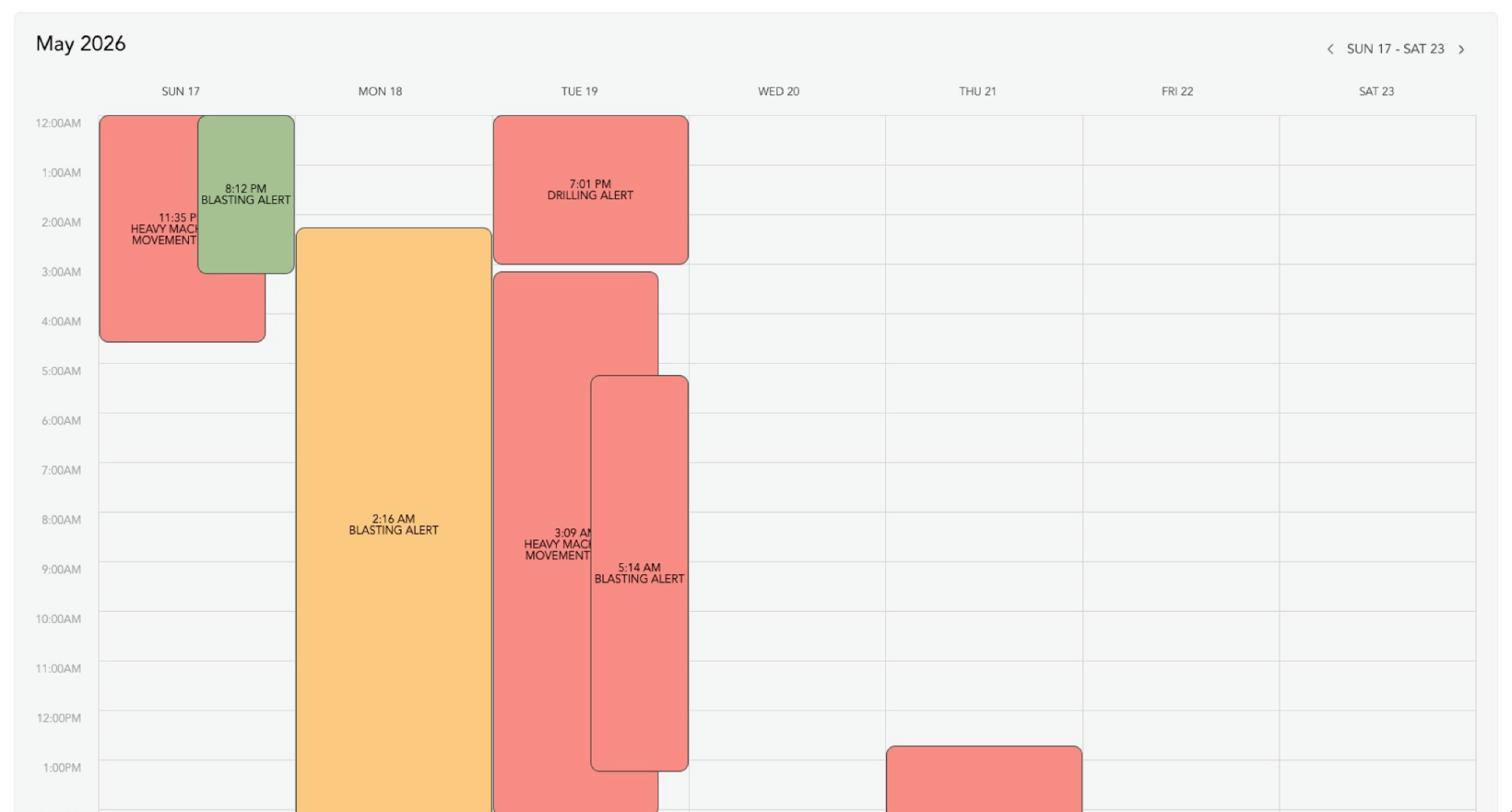
Auto-generated operational calendar

Green Resilience can translate climate-risk signals into regularly updated planning views for weather-sensitive operations.

planning / weekly calendar
Auto-generated operational calendar showing weather-sensitive activity windows and alerts.

The operational calendar is generated from configured thresholds, risk indicators, activities, and site-specific constraints. It can be updated automatically as new forecast data becomes available, helping teams keep planning views aligned with changing weather and climate-risk conditions.

Auto-generated from risk logicUpdated as forecasts changeLinked to sites, assets, crops, or activitiesSupports operational windows and escalationExportable or integrable as a calendar feed
Capabilities

Key capabilities

A configurable climate-risk intelligence layer for operational teams, planners, partners, and decision-makers.

Forecast and climate data ingestion

Short-term forecasts, seasonal outlooks, observations, and climate projections.

Satellite and spatial context

Vegetation, soil moisture, surface water, exposure mapping, site context, and anomaly detection.

Configurable thresholds

Risk logic aligned with crops, assets, activities, sites, SOPs, safety rules, or partner-defined tolerances.

Severity and escalation logic

Low, moderate, high, and critical levels with configurable recipients and escalation paths.

Operational windows

Best execution, caution, avoid, and stop windows for weather-sensitive activities.

Advisory generation

Clear recommendations, short rationale, confidence-aware language, and human escalation where needed.

Reports and evidence packs

Decision records, event logs, summaries, management reports, and programme outputs.

APIs and partner integration

Structured outputs for dashboards, partner platforms, operational systems, planning tools, and notification channels.

Strategic planning support

Seasonal outlooks and climate projections for adaptation, resilience, investment, and portfolio decisions.

Data and technology ecosystem

Green Resilience combines forecasts, Earth observation, cloud infrastructure, and operational logic to support climate-risk intelligence across sectors.

Google Cloud logo
Copernicus programme logo
NASA logo
Open Meteo logo
Tomorrow.io logo

How it works

  1. 01

    Connect

    Connect sites, crops, assets, or territories.

  2. 02

    Monitor

    Monitor weather, satellite, and climate indicators.

  3. 03

    Detect

    Detect thresholds and emerging risks.

  4. 04

    Alert

    Generate alerts and recommendations.

  5. 05

    Decide

    Support operational, strategic, and financial decisions.

Built for multiple advisory channels

Reach decision-makers, operators, partners, and field teams where they already work — depending on the deployment scope.

Dashboards

For management teams, programme leads, planners, and operational decision-makers.

Alerts

Threshold and severity-based alerts routed to the right people through the right channel.

WhatsApp / SMS

Proactive alerts and short practical recommendations for field teams, operators, and farmers.

Chatbots or partner platforms

Embed advisory inside existing farmer-facing apps, partner platforms, or guided assistants.

Reports and evidence packs

For management, partners, donors, regulators, and programme stakeholders.

Integration-ready feeds

Structured outputs for existing dashboards, BI tools, ERP, EAM, CMMS, simulation models, data platforms, or partner systems. Examples: forecast time series, risk indices, exceedance flags, operational windows, traceability metadata, API-ready outputs.

Alerts and escalation

From thresholds to recommended actions

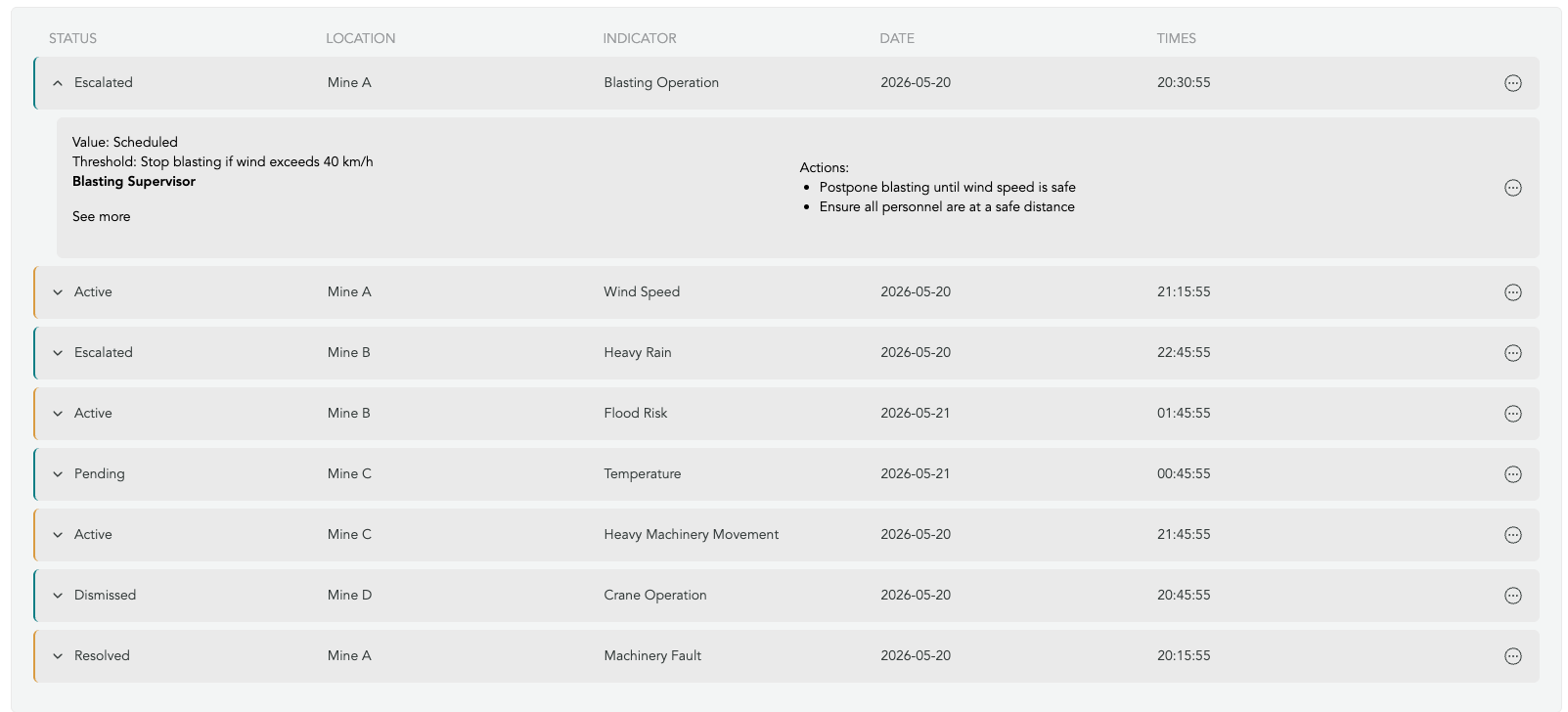
Alerts can include status, location, indicator, date, time, recommended actions, and escalation logic — so teams can move from a raw signal to a decision quickly.

alerts / risk table
Alert table showing operational risk status, location, indicators, and recommended actions.
Responsible AI

Designed for trusted guidance, not overconfident answers

Green Resilience is designed to provide useful recommendations when the data supports them, and responsible caution when it does not.

The advisory layer should not be forced to generate a definitive answer in every situation. Where the available data is incomplete, ambiguous, outside the supported scope, or insufficient for a reliable recommendation, the system should say so clearly, request more information, or suggest human follow-up.

High confidence

When the advisory basis is clear, the system provides concise and actionable recommendations.

Moderate confidence

When uncertainty exists, the system provides cautious guidance and explains the main limiting factor.

Insufficient basis

When the data is not sufficient, the system clearly states that a reliable answer cannot be provided on the available information.

Human escalation

Where local diagnosis, field observation, or expert judgement is needed, the system can recommend escalation to an extension agent, agronomist, advisor, or partner-designated support channel.

This approach helps distinguish between a weather alert, a probable agronomic implication, and a confirmed field-level diagnosis.

Illustrative farmer interaction scenarios

Farmer-facing advisory, powered by climate intelligence

Green Resilience can translate weather, satellite, crop, and location-specific risk signals into practical guidance that farmers can receive through partner channels such as mobile apps, chatbots, WhatsApp, SMS, or extension networks.

Green Resilience is designed to support practical advisory, not just data visualisation. For agriculture and farmer-facing programmes, the platform can generate structured advisory outputs that explain what risk is emerging, why it matters, what the farmer should consider doing, and when uncertainty or local verification is needed.

These examples illustrate the types of guidance Green Resilience can support. Final advisory content depends on crop, location, available farmer data, deployment scope, and local validation.

Severe rainfall alert

Farmer context

A maize farmer in eastern Zambia.

Risk signal

Heavy rainfall expected within the next 48 hours.

Example advisory

Heavy rainfall may increase the risk of runoff, waterlogging, nutrient loss, and reduced field accessibility. Consider postponing fertiliser application, checking drainage paths, and avoiding field operations until conditions improve.

Decision value: Helps the farmer avoid poorly timed interventions and reduce exposure to weather-related losses.

Want to power advisory for your farmers or producers?

Green Resilience can support farmer-facing advisory through partner platforms, programme tools, or direct operational dashboards.

Industrial scenarios

Illustrative scenarios for industrial operations

Examples of how Green Resilience can translate weather and climate signals into operational decisions for mining, energy, infrastructure, and exposed industrial sites.

These examples are illustrative. Final outputs depend on the site, activity, available data, operational thresholds, SOPs, and deployment scope.

Heavy rainfall and site access risk

Context
A mining or industrial site with haul roads, access roads, or exposed logistics routes.
Risk signal
Heavy rainfall is expected, with accumulated rainfall increasing over the next 24 to 72 hours.
Advisory
Access conditions may deteriorate. Review haul road conditions, prepare alternative routing, adjust shift or delivery plans, and monitor high-risk access points.
Decision value
Helps teams anticipate disruption before access becomes unsafe or unreliable.

Extreme heat and worker safety

Context
Outdoor crews, mine teams, construction workers, or field technicians.
Risk signal
Heat index or temperature thresholds are expected to exceed operational safety limits.
Advisory
Adjust work-rest cycles, prioritise critical tasks during cooler windows, brief supervisors, and escalate if thresholds reach critical levels.
Decision value
Supports HSE planning and reduces reliance on reactive heat response.

High wind and exposed operations

Context
Lifting, drone operations, elevated work, spraying, maintenance, or exposed assets.
Risk signal
Wind speeds or gusts are expected to exceed safe or effective operating thresholds.
Advisory
Review the planned activity window, delay exposed operations where needed, and identify the next lower-risk operational window.
Decision value
Helps protect people, equipment, and operational quality.

Maintenance window planning

Context
Renewable energy, industrial assets, construction sites, or remote operations.
Risk signal
A short low-risk weather window is expected between two higher-risk periods.
Advisory
Prioritise weather-sensitive maintenance during the favourable window and prepare contingency plans if conditions shift.
Decision value
Supports more reliable scheduling and reduces avoidable downtime.

Climate projection stress test

Context
An infrastructure owner or industrial operator assessing long-term asset resilience.
Risk signal
Climate projections indicate increasing heat stress, extreme rainfall frequency, drought duration, or access disruption risk.
Advisory
Review design assumptions, drainage capacity, cooling needs, access resilience, and investment priorities across the asset portfolio.
Decision value
Supports strategic resilience planning and capital allocation.

Need to model operational risk for your sites or assets?

What makes the advisory location-specific?

Useful guidance depends on connecting climate signals to the specific site, asset, crop, activity, or decision context.

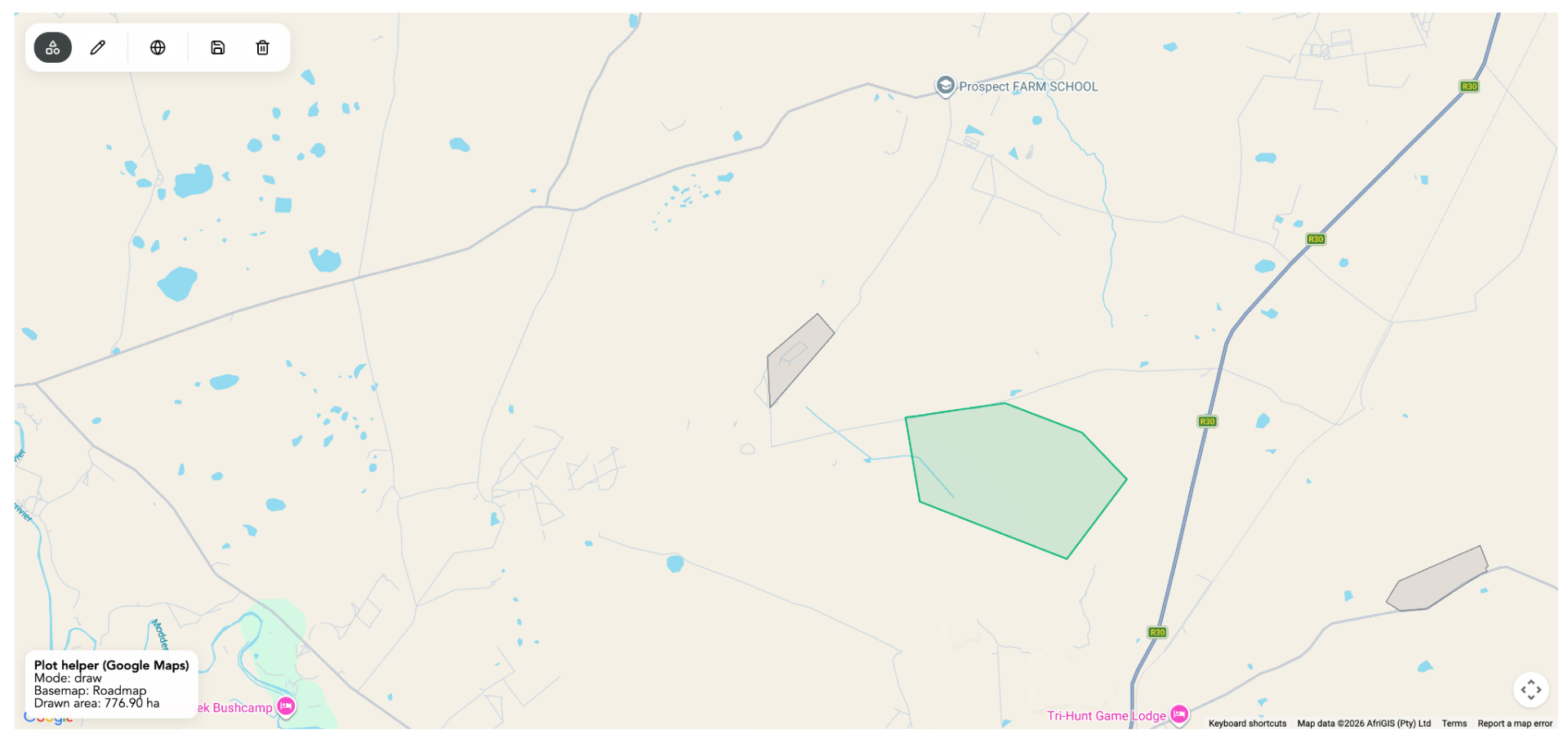
Location and boundary context

Location, parcel, site, asset, or route boundaries help connect climate signals to the right operational context.

plot helper / map
Map-based plot helper showing a selected parcel boundary.

Current indicators and thresholds

Current weather and environmental indicators can be monitored and converted into risk logic, thresholds, and alerts.

indicators / nowcast
Indicator grid showing weather and environmental variables in the Green Resilience platform.

Location

GPS coordinates, site boundaries, farm boundaries, asset locations, routes, or territories.

Activity

The operation being planned: spraying, irrigation, maintenance, access, logistics, construction, fieldwork, or safety management.

Sector context

Agriculture, mining, energy, infrastructure, construction, public-sector resilience, or partner advisory programmes.

Thresholds

Operational limits, agronomic thresholds, safety rules, SOPs, or partner-defined tolerances.

Time horizon

Nowcast, 24h, 72h, weekly outlook, seasonal forecast, or climate projection.

Exposure

People, crops, assets, infrastructure, routes, fields, sites, or supply chains affected by the risk.

Delivery channel

Dashboard, email, WhatsApp, SMS, API, report, chatbot, or partner platform.

Local validation

Human review, field feedback, expert input, or local calibration where needed.

At minimum, location and decision context are needed to make advisory useful. Additional information such as crop, asset type, SOPs, thresholds, site boundaries, or operational schedules improves relevance and helps avoid generic alerts.

Inside the platform

A few example views from the Green Resilience platform, showing how forecast monitoring, seasonal outlooks, and operational planning come together.

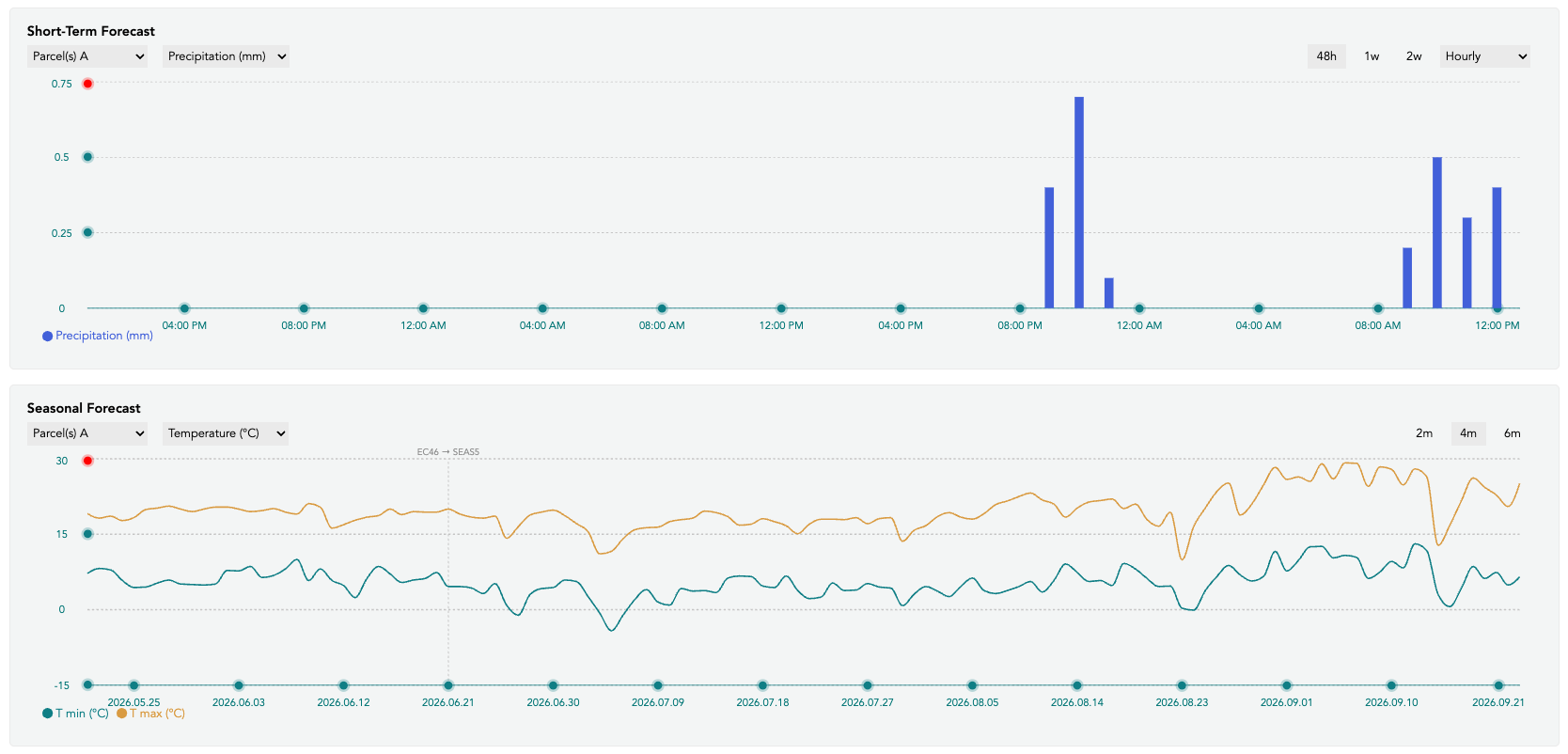
Short-term forecast chart in the Green Resilience platform.

Short-term forecast monitoring

Monitor near-term forecast indicators by parcel, site, or asset to support operational decisions over the next 48 hours to two weeks.

Seasonal forecast chart in the Green Resilience platform.

Seasonal forecast outlooks

Review seasonal forecast indicators to support planning, preparedness, and longer-term climate-risk decisions.

Auto-generated operational calendar showing weather-sensitive activity windows and alerts.

Auto-generated operational calendar

Automatically generated and regularly updated planning views help teams translate risk signals into operational windows, alerts, and scheduling decisions. Calendar feed integration can support existing planning workflows where relevant.

Interface examples are shown for illustration and may evolve as the platform is configured for each sector, site, crop, asset, or partner workflow.

Example platform views
Forecast monitoring view.
Forecast monitoring
Seasonal outlooks view.
Seasonal outlooks
Auto-generated operational calendar view.
Operational calendar
Alerts and escalation view.
Alerts and escalation

What happens after you request a demo?

After you request a demo, Green Resilience will review your sector, sites, crops, assets, and decision needs, then show how the platform can support monitoring, alerts, reporting, and climate-risk decision-making.

See the platform in action

Tell us about your context and we'll prepare a tailored walk-through.